
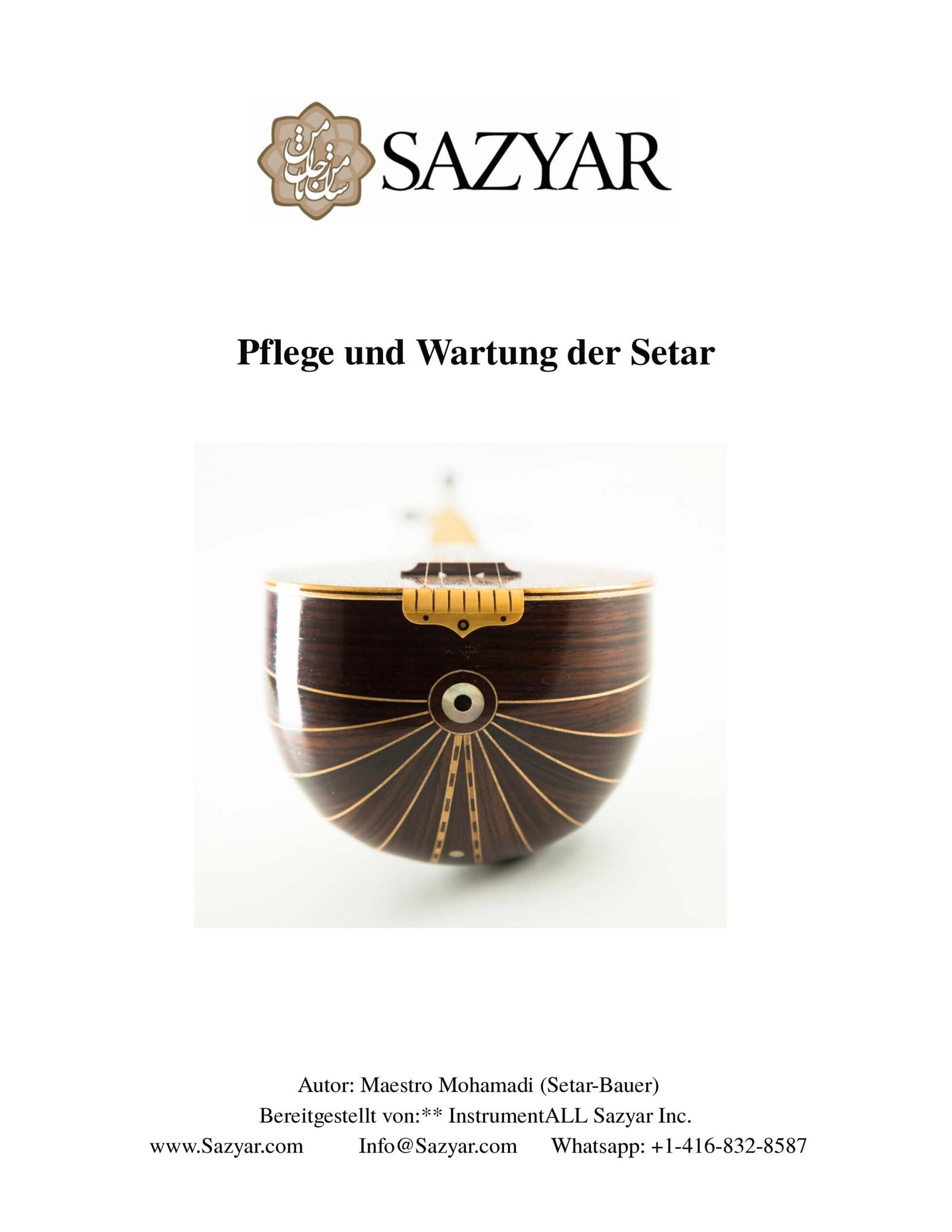
Pflege und Wartung der SetarEinleitung
Persische Instrumente besitzen einzigartige klangliche Eigenschaften und eine besondere Musikkultur. Daher erfordern sie spezifische Bedingungen für Bau, Pflege und Erhaltung. Während einige Grundsätze der Instrumentenpflege allgemein gelten, verlangen die spezifische “Klangfarbe“ und die Baumaterialien p…
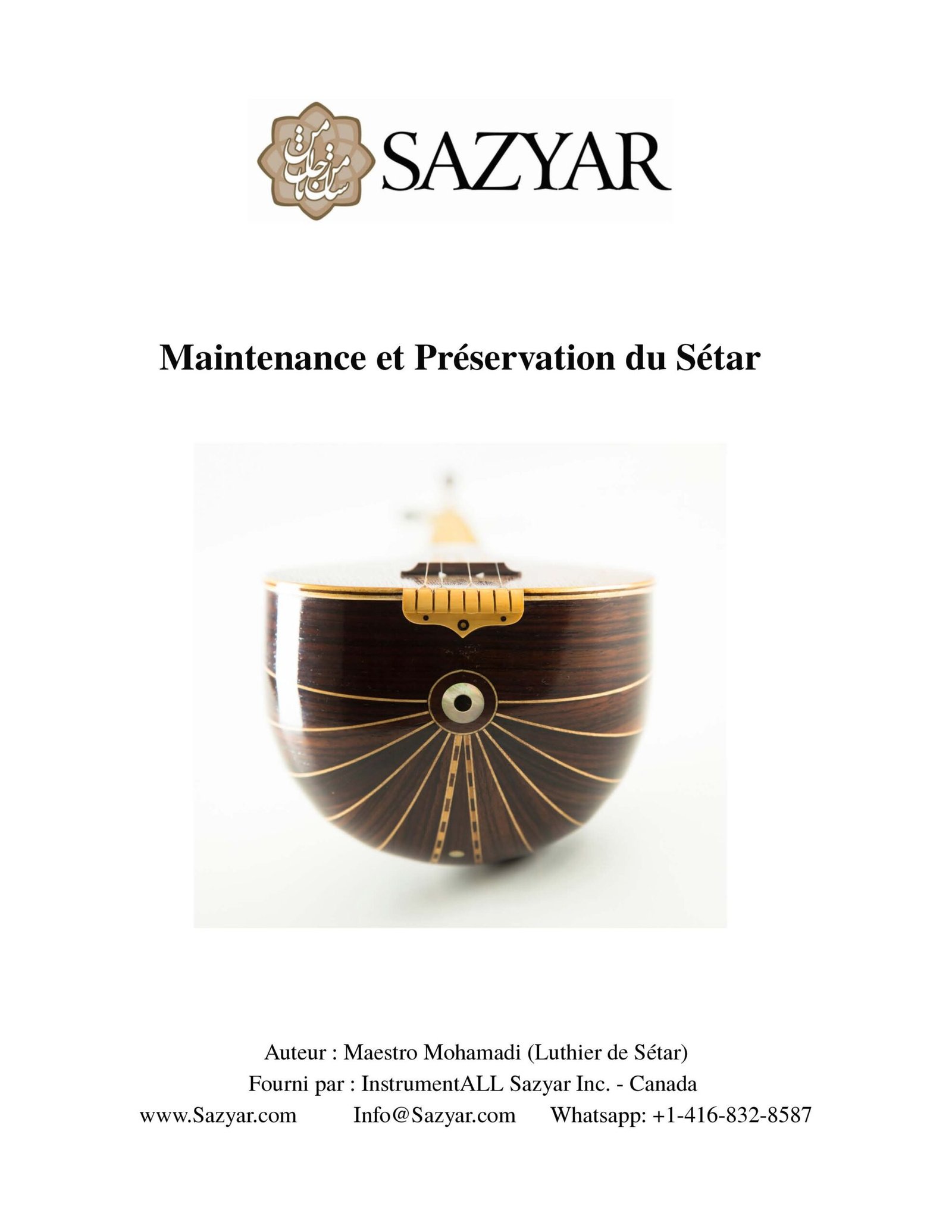
Maintenance et Préservation du SétarIntroduction
Les instruments persans possèdent des qualités acoustiques uniques et une culture musicale distincte, nécessitant des conditions spécifiques pour leur construction, leur entretien et leur préservation. Bien que certains principes de maintenance puissent s'appliquer aux instruments non persans, l…
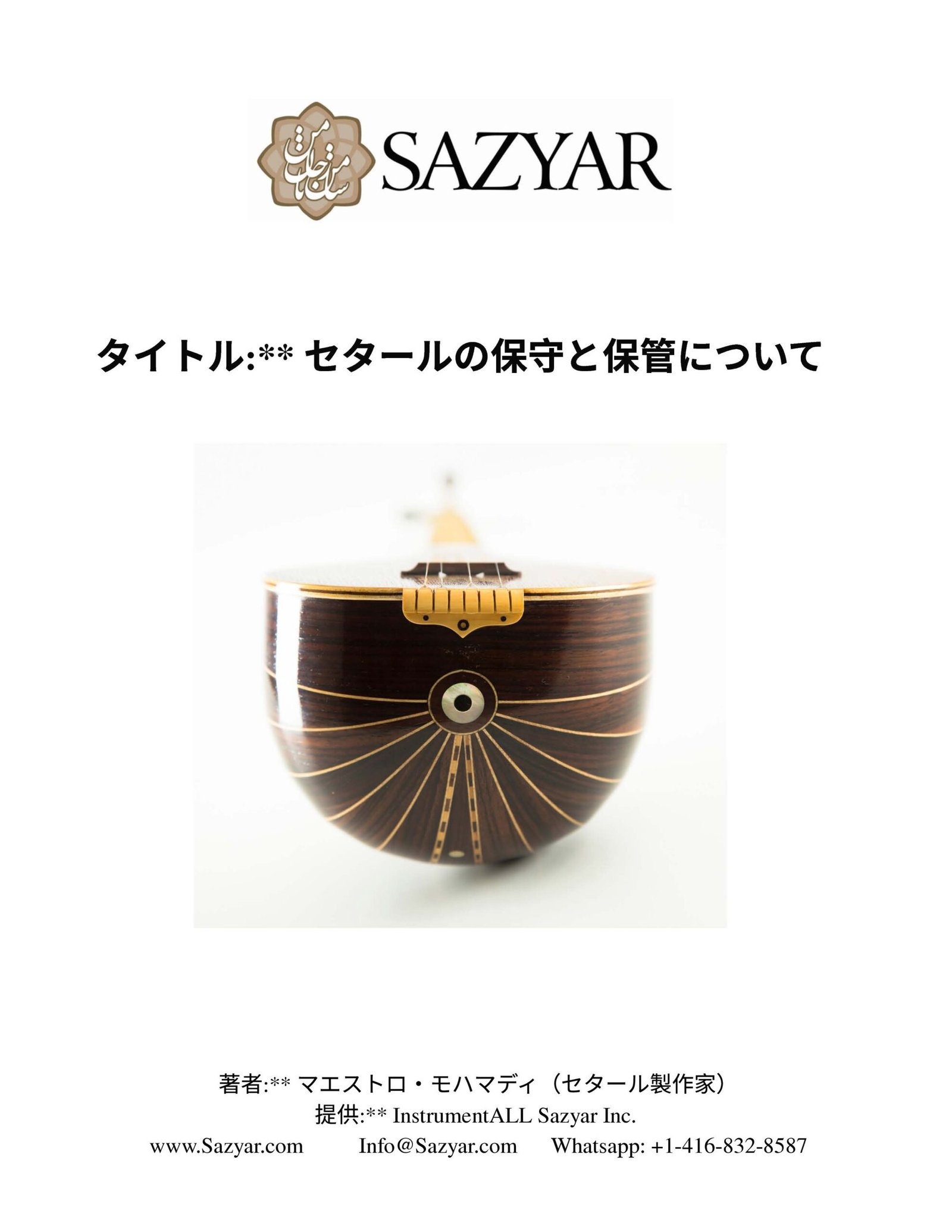
タイトル: セタールの保守と保管についてはじめにペルシャの楽器は、独特の音響特性と音楽文化を持っており、製作、保守、保管において特別な条件が求められます 。一般的な楽器の保守原則が適用される場合もありますが、ペルシャ楽器特有の「音色」や素材には専門的なケアが必要です 。
ペルシャ楽器は個性的であり、全く同じ楽器は二つとして存在しません 。同じ型を使って100本のセタールを作ったとしても、完全に同じものはほぼゼロです 。構造や音の系統は同じでも、主要素材である木材は常に変化する要素だからです 。木材は顕微鏡レベルの分子構造に至るまで物理的・機械的性質が異なります 。この細胞構造の違いが、音響特性や振動への反応に違いを生みます 。
その中でもセタール(Setar)は特に繊細な…
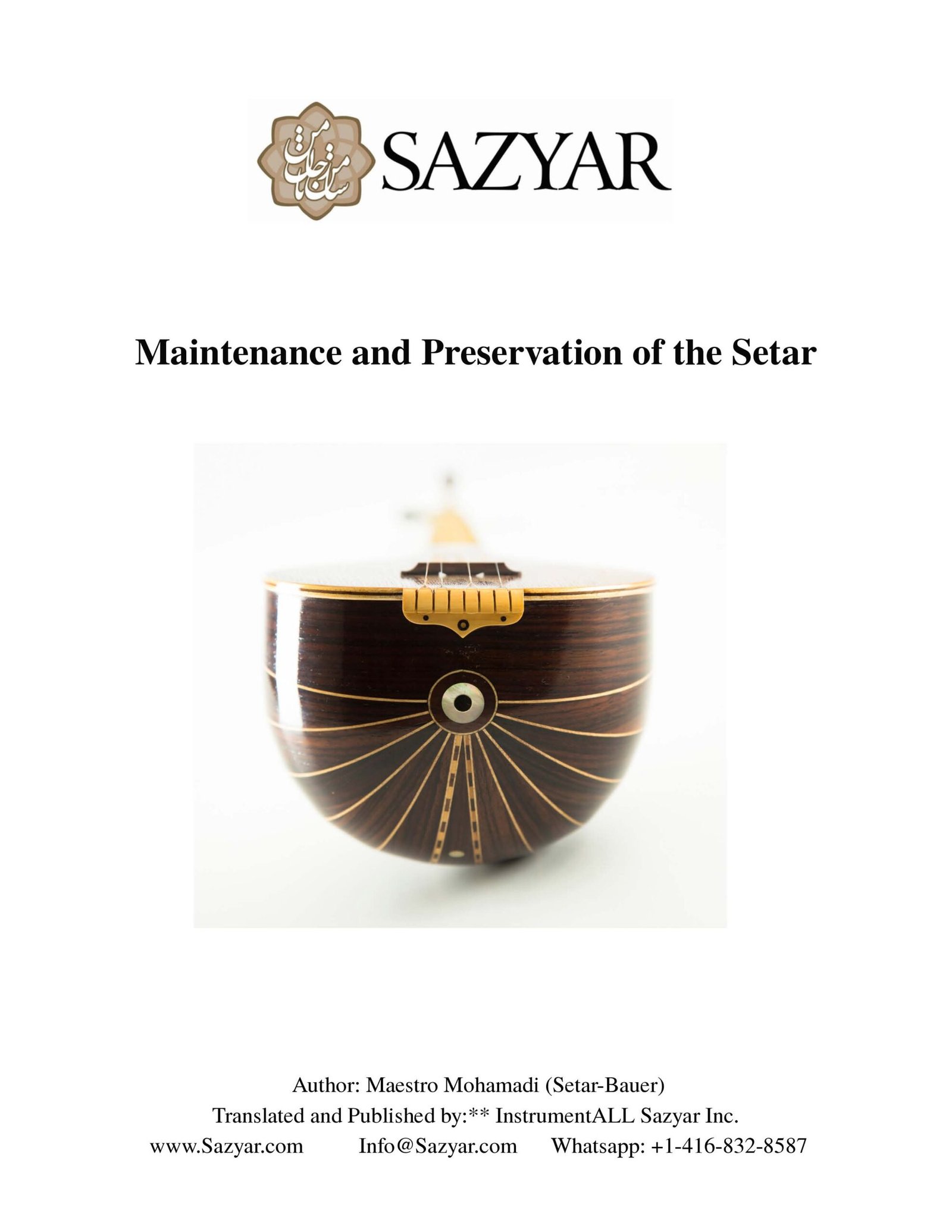
Maintenance and Preservation of the SetarIntroduction
Persian instruments possess unique acoustic qualities and a distinct musical culture, requiring specific conditions for construction, maintenance, and preservation. While some maintenance principles may apply to non-Persian instruments, the specific "tone color" and construction materials o…
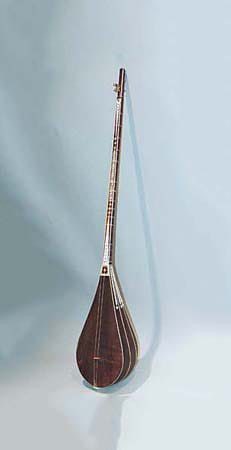
The Uzbek dutar is a long-necked, two-stringed instrument that is similar to the dutar played in other Central Asian countries.It is commonly used in traditional Uzbek music, and it has a bright and lively sound that is perfect for accompanying vocalists or playing melodies.
The dutar is played with the fingers, and it is known for its abi…
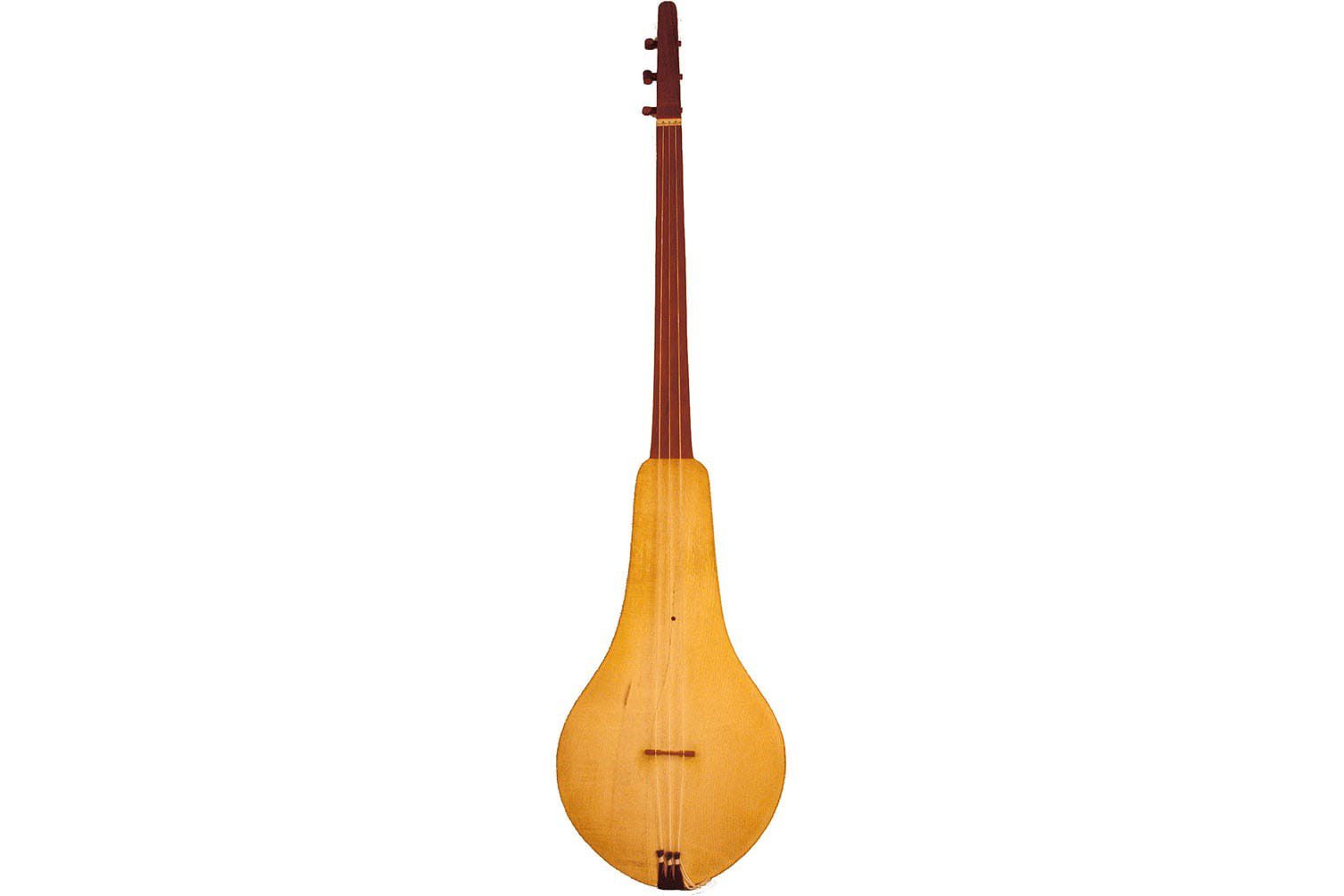
The Kyrgyz Komuz is a three-stringed instrument that is an important part of Kyrgyz culture.It is played by plucking the strings with the right hand while using the left hand to produce harmonics.The Komuz is known for its ability to produce a wide range of sounds, from delicate melodies to powerful rhythms.
It is often played at weddi…

The Turkmen Gyjak is an important instrument in Turkmen music. It is a three-stringed bowed instrument that is similar in many ways to the violin.The Gyjak has a round body, and it is played by drawing a bow across its strings. The instrument produces a rich and expressive sound that is often used to convey emotion in traditional Turkmen musi…
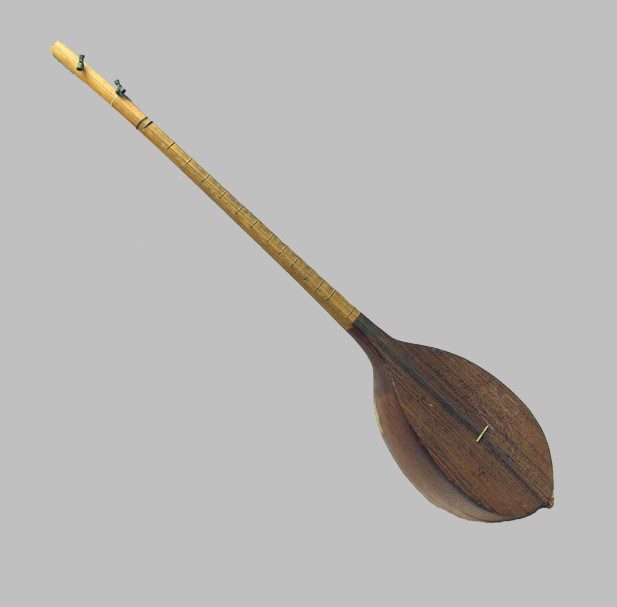
The Turkmen dutar, this long-necked, two-stringed instrument is an important part of Turkmen culture. It is commonly played in both traditional and modern music, and it has a bright and lively sound that is perfect for solo performances but also singing.The dutar is played with the fingers, and it is known for its ability to produce intricate…
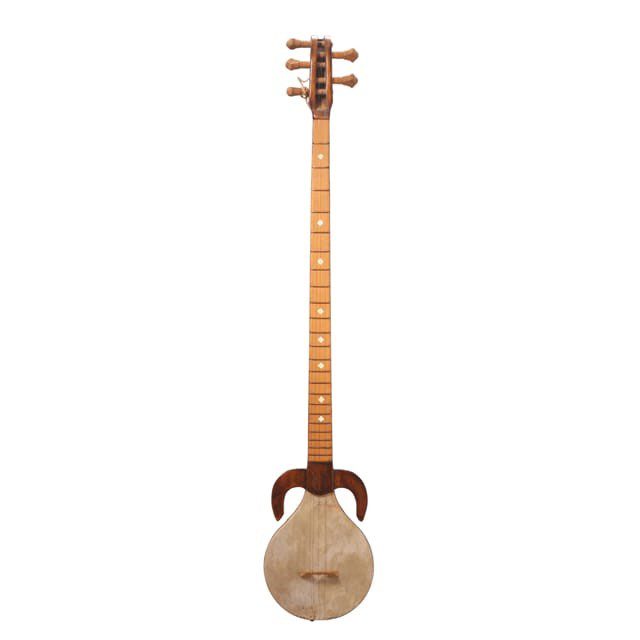
The Kashgar Rubab is a traditional stringed instrument that has been played in Central Asia for centuries. Its origins can be traced back to the early Islamic period, and it is thought to have been brought to Central Asia by Arab musicians.The Rubab has a short neck and a round body, and it is played with a plectrum.
The instrument has a w…

Daf is a framed drum musical instrument widely used for folk and classical music in central and south Asia. Kurdish community uses Daf in their rituals and other ceremonies.In the Pahlavi era, Daf was called Dap and it is believed that Daf or Dap was before the existence of Islam or Sufism.Based on historical evidence, Daf has been played…
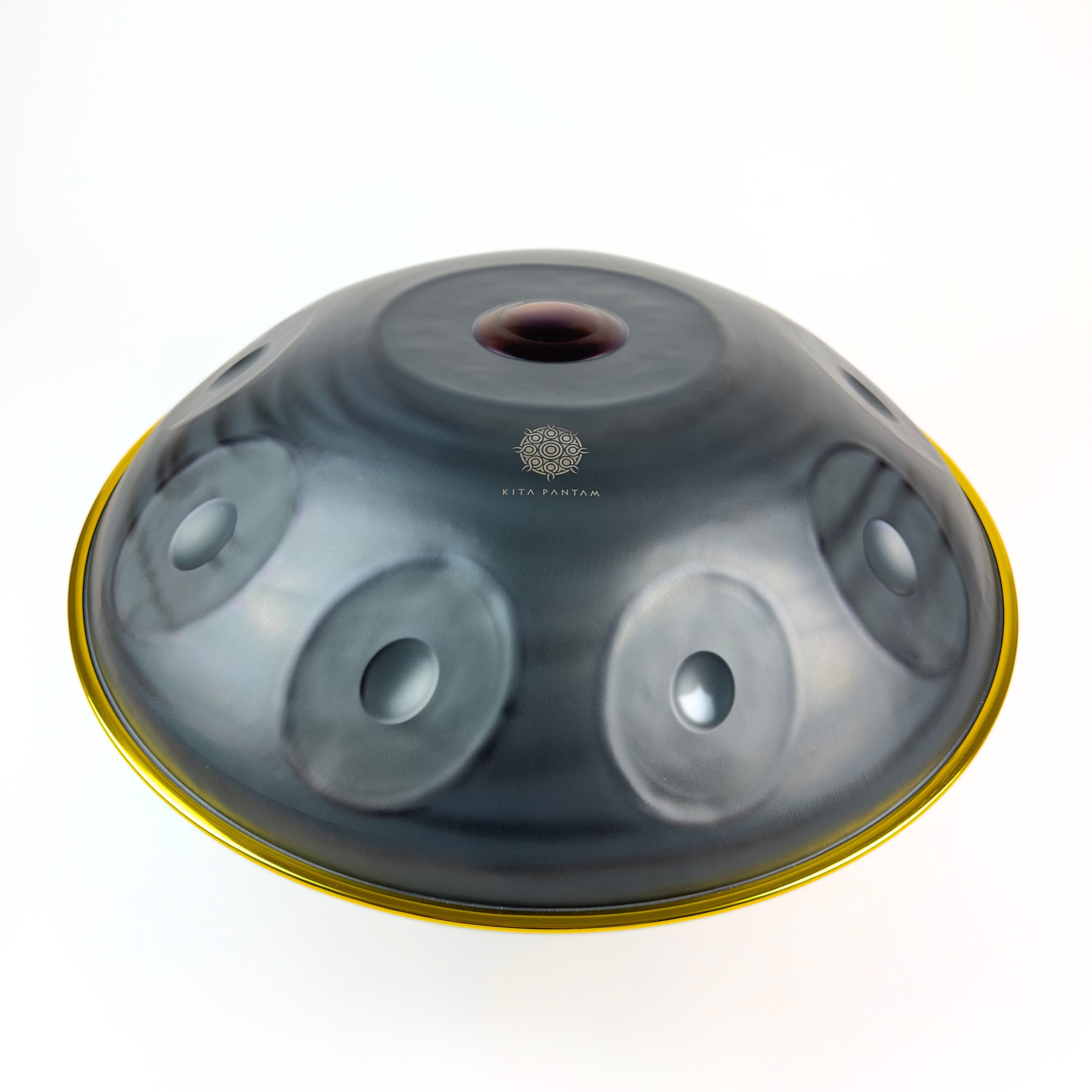
Handpan is a shell-like metal musical instrument which consists of two half shells, bound together and is considered as the category of Idiophones. The general idea of a Handpan is derived from a Caribbean steelpan.Basically, Felix Rohner and Sabina Scharer in Bern-Switzerland made this shape of steelpan and called it Hang or Hang drum. So, Han…

Shurangiz Setar has the softness and the whispering quality of Setar, while it has some characteristics of Tar, like a stronger and more bass sound. The wood top body of the Setar is replaced with the skin body in the Shurangiz Setar. Many Setar players like the fact that they can experience a different tone while still having playability similar t…
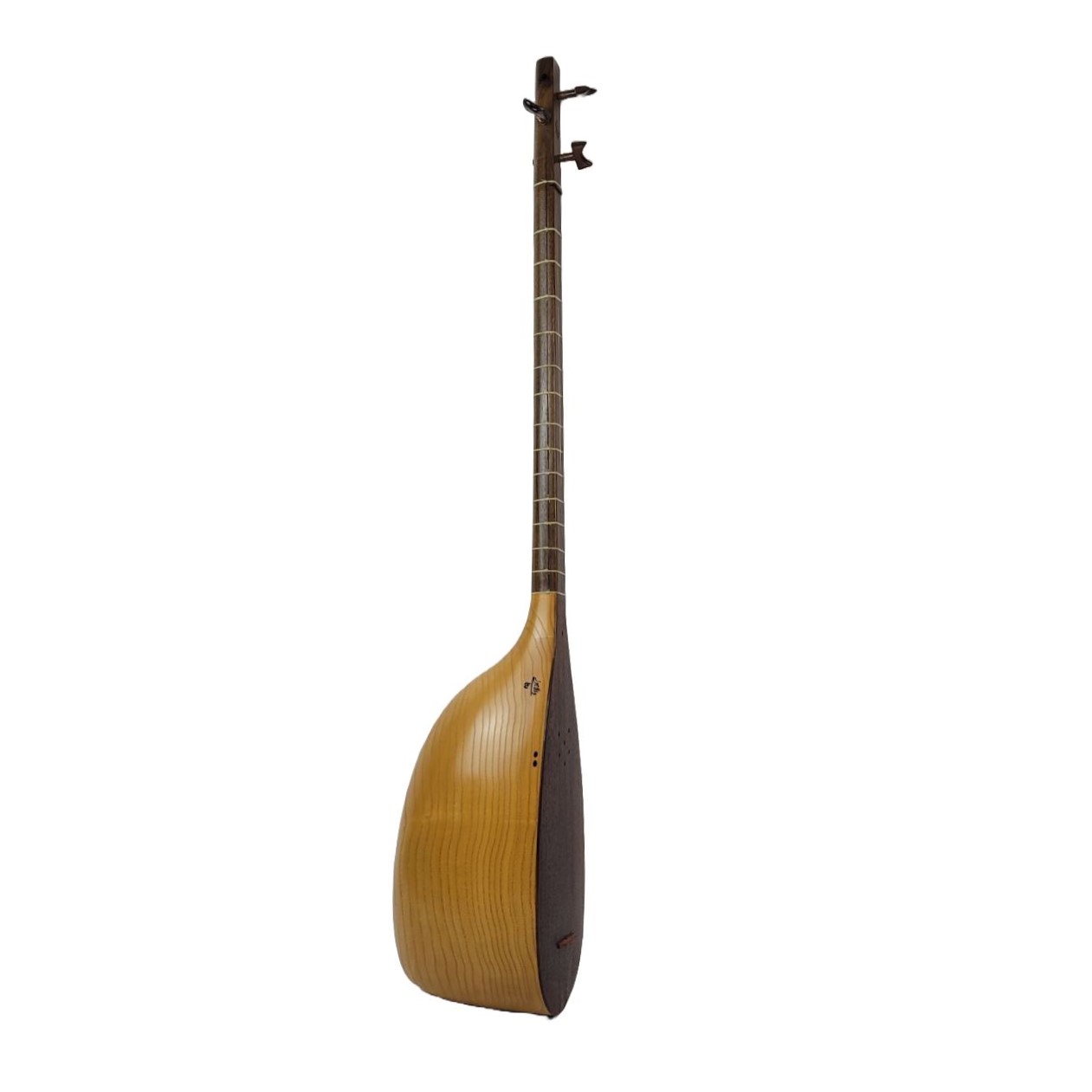
Tanbour is a sacred lute family instrument with spiritual and mystic sound characteristics. Different versions of Tanbour are played in countries such as Iran, India, China, Turkey, Japan, Afghanistan, Greece, etc.Tanbour is one of the most ancient instruments which has deep and valuable roots in human history and culture and is considered a …
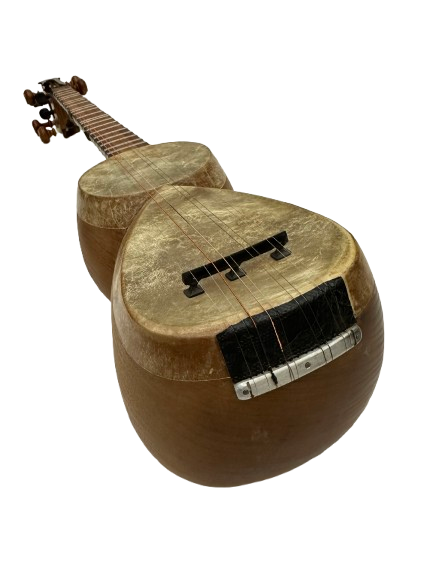
The Tar is a string musical instrument with 6 strings and belongs to the lute family. Different versions of Tar are played in different countries with many similarities.Tar is designed to play solo or to accompany the vocalist or a band. Tar has great credit due to its capability of many Western techniques, while it has the delicacy of Eastern …
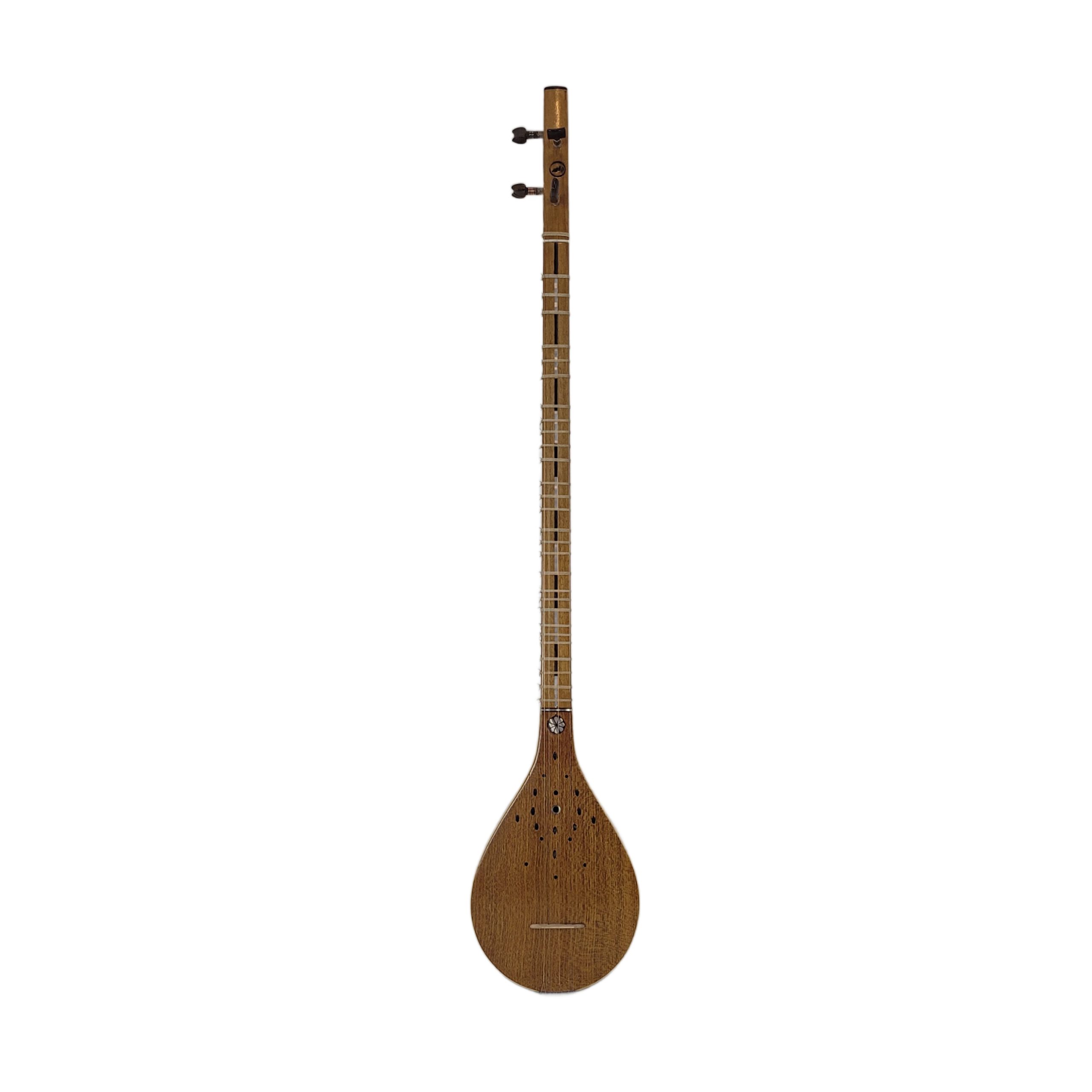
Setar is a spiritual string instrument and a member of the lute family.Many musicians visualize Setar as a whispering instrument, soft, heartfelt and tranquillizing.In the Persian language, “Se” means “three” and “Tar” means “string”, but it has four strings! In the past, it had 3 strings, but over 200 years ago, a Sufi maestro “Dervish M…
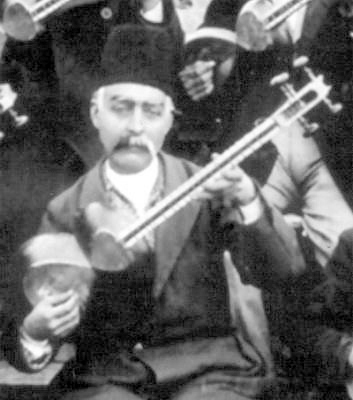
Mirza Abdollah, also known as Agha Mirza Abdollah Farahani, (b. 1843 – 1918) was a tar and setar player. He is among the most significant musicians in Iran's history. Born in Tehran, he and his younger brother Mirza Hossein Gholi started learning music from their father Ali Akbar Farahani who was a well-known musician.He is best known for his r…
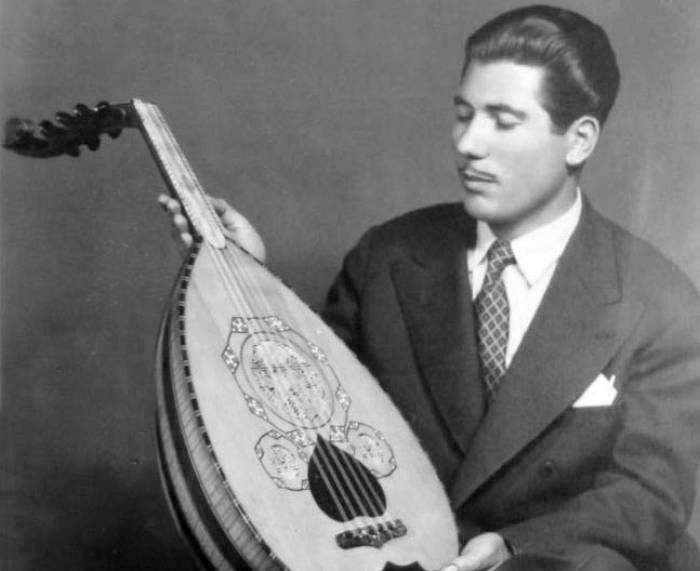
Nariman was born in 1923 in Saveh city. He started learning music at the age of 8 with all his passion and might.
After learning the fundamentals of music, he was directed to instrument making, where he started making Chagoor. In 1949, made his first Oud(Barbat). His extraordinary masterpiece was such an exception in sound quality and structure, w…