
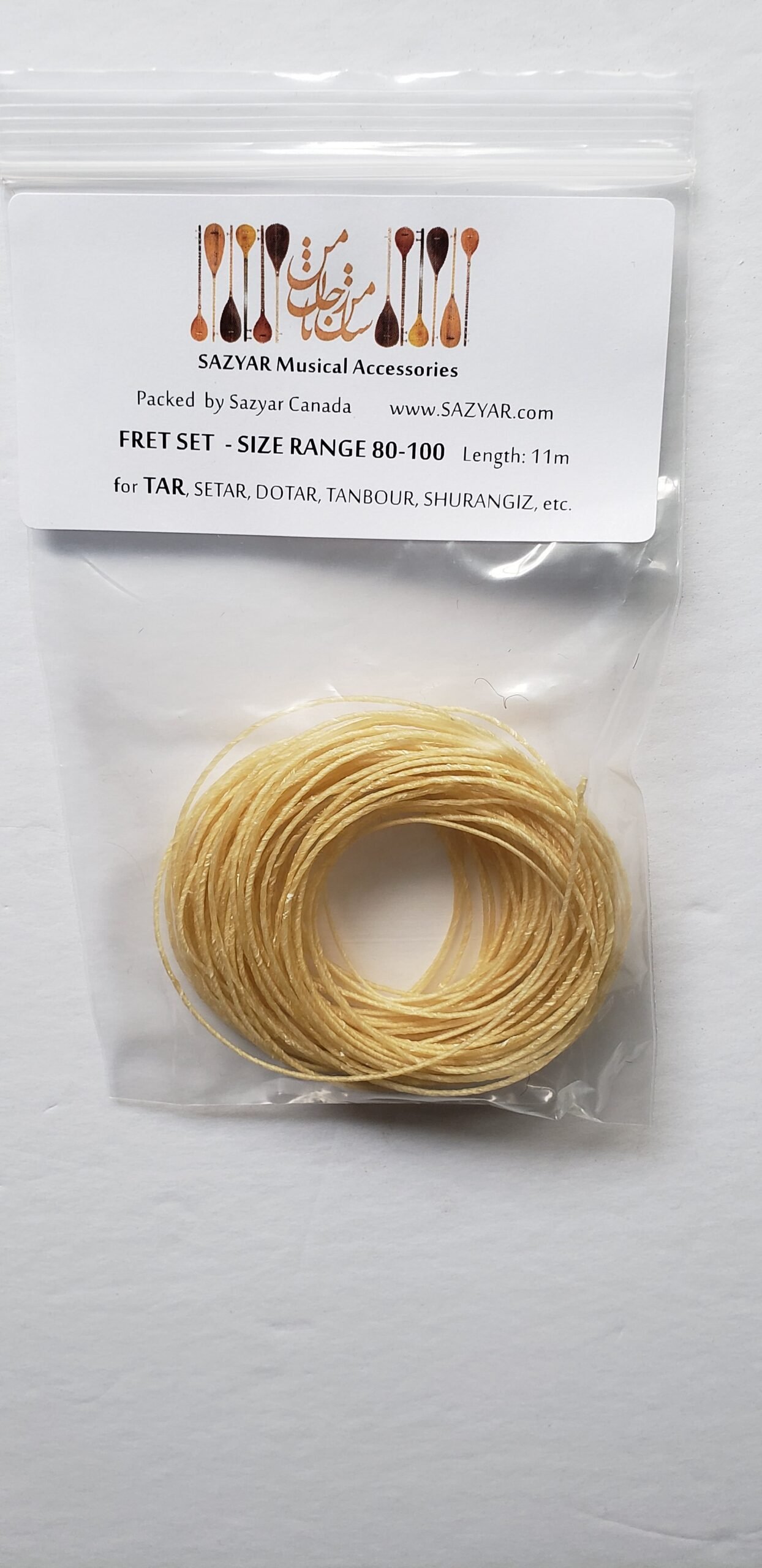
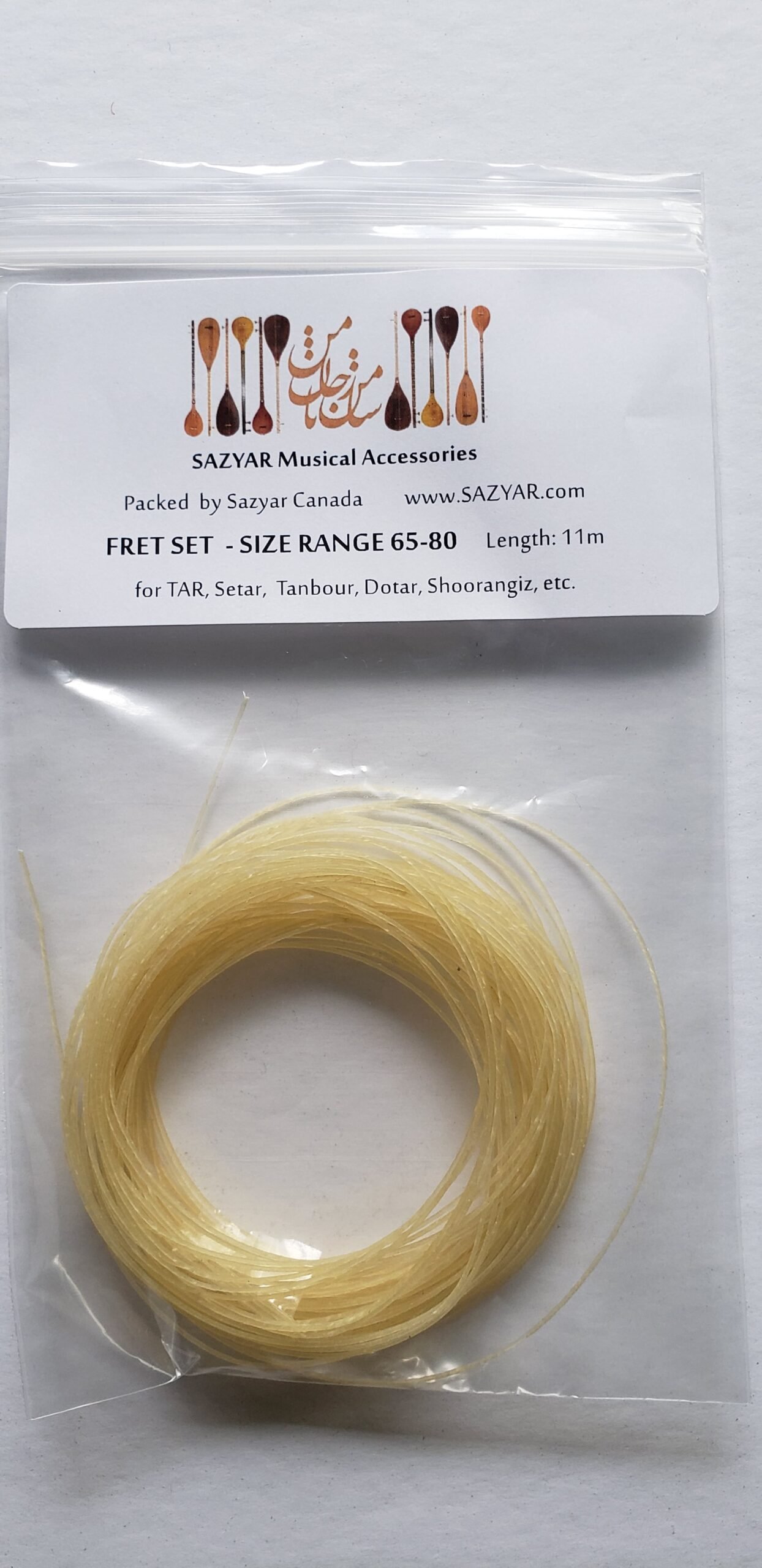
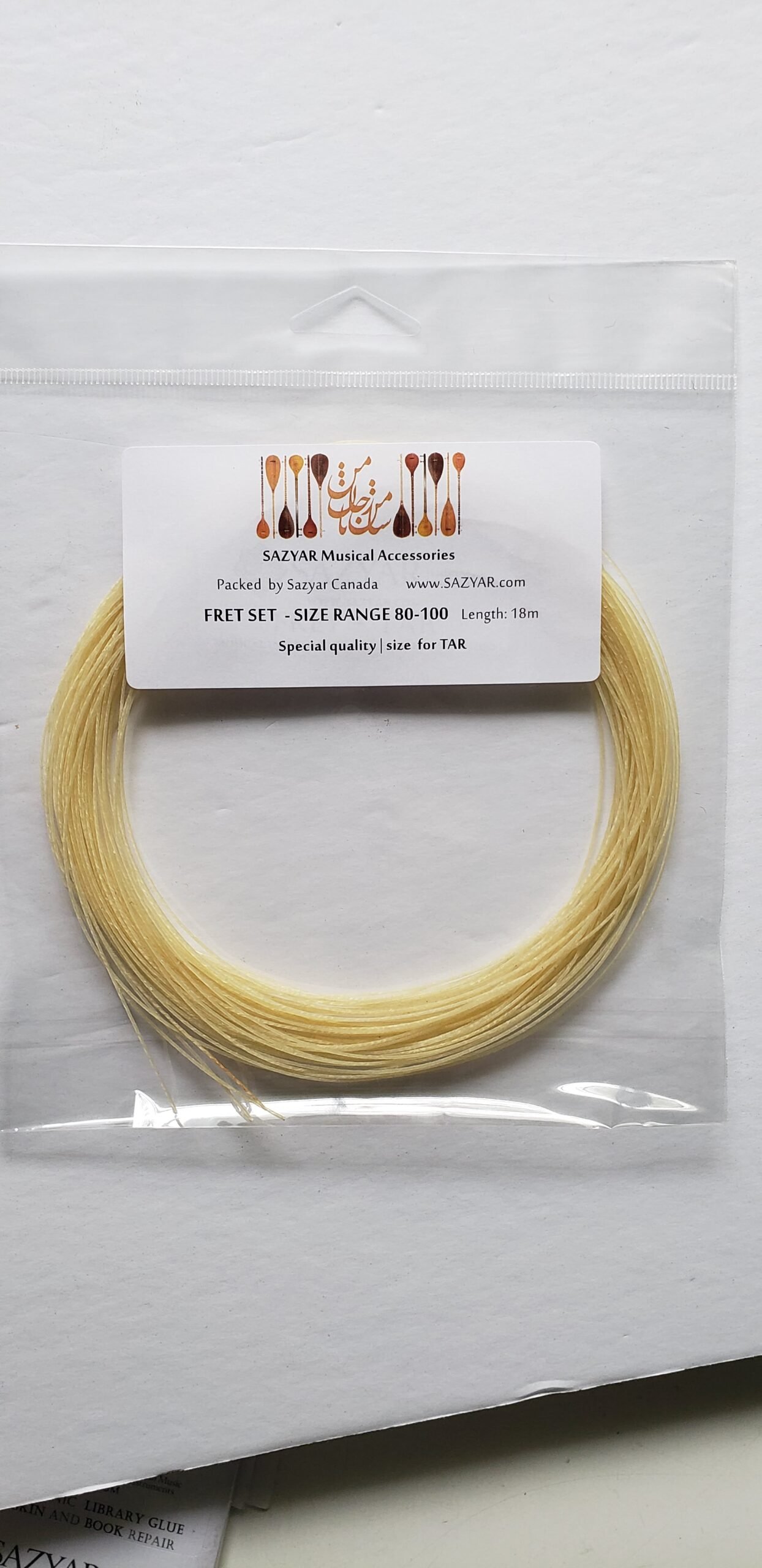
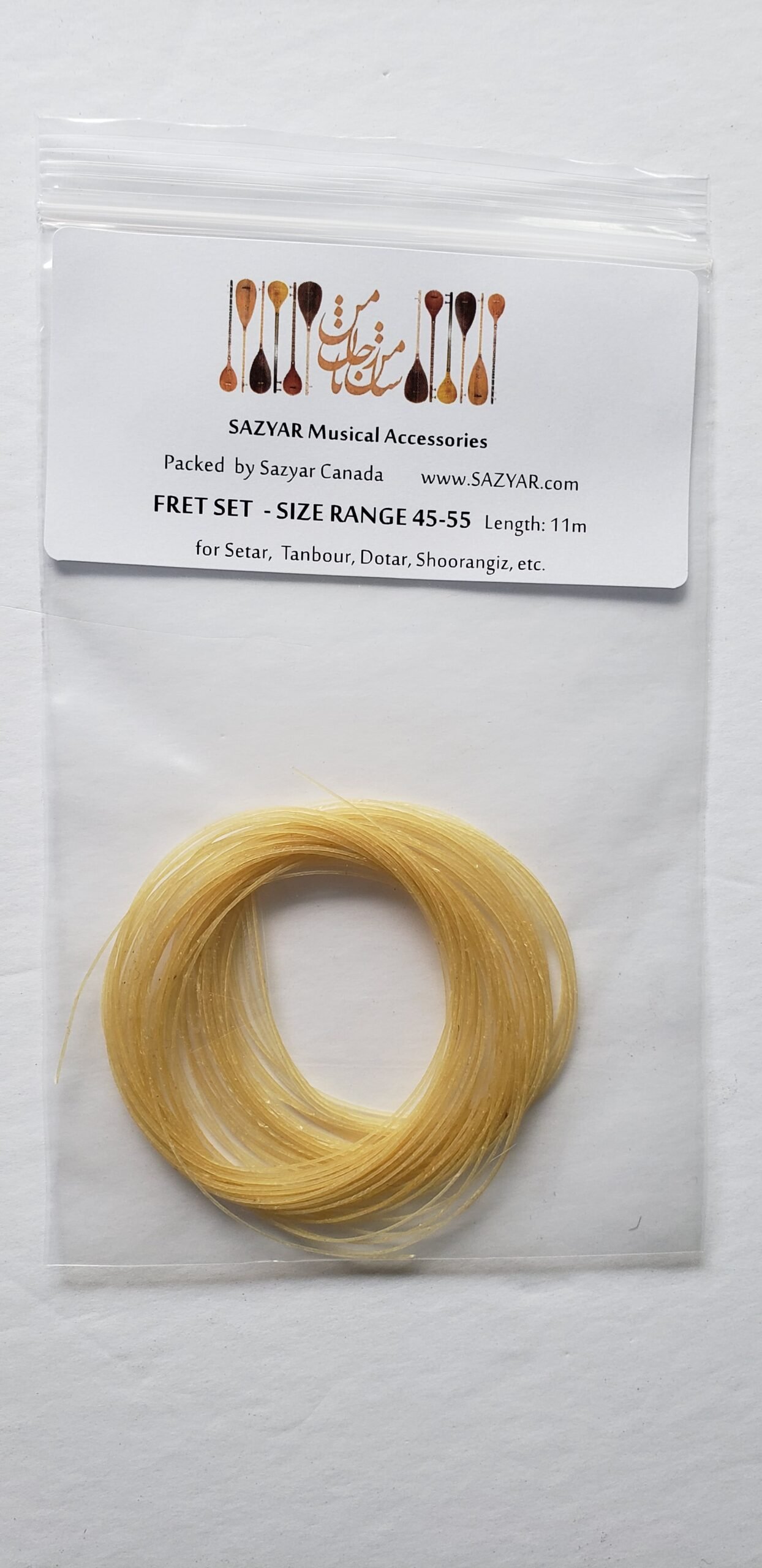
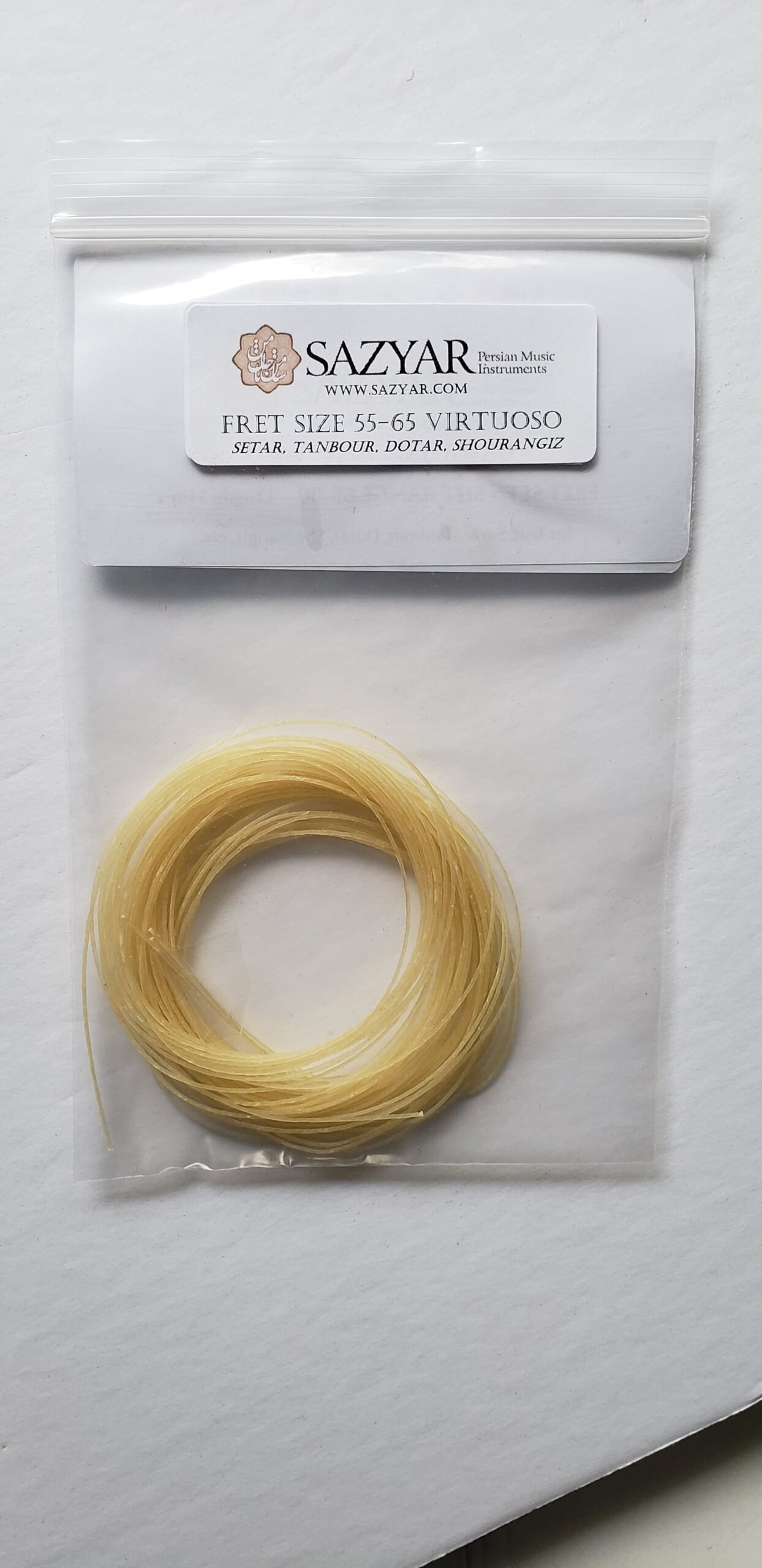
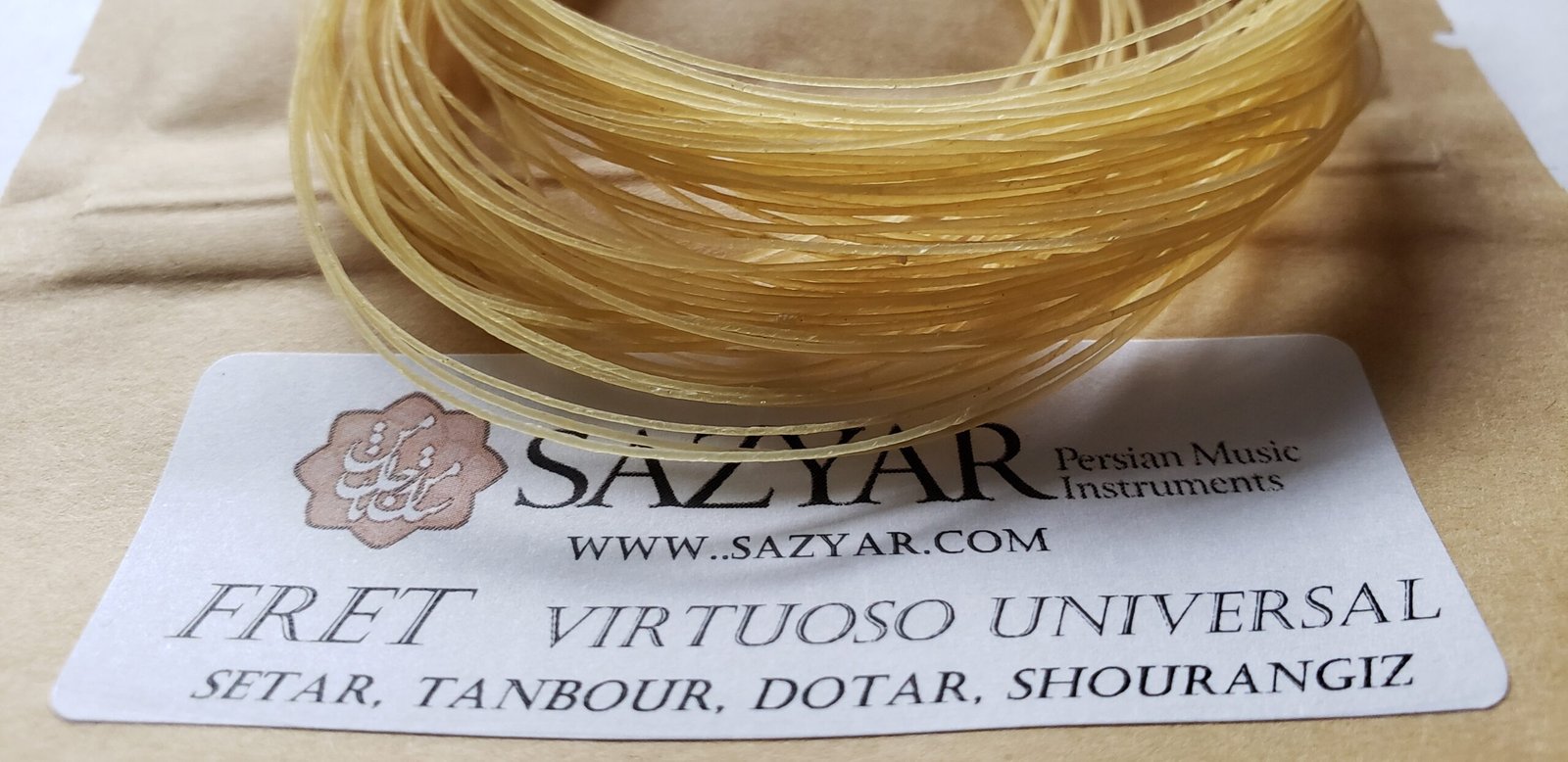
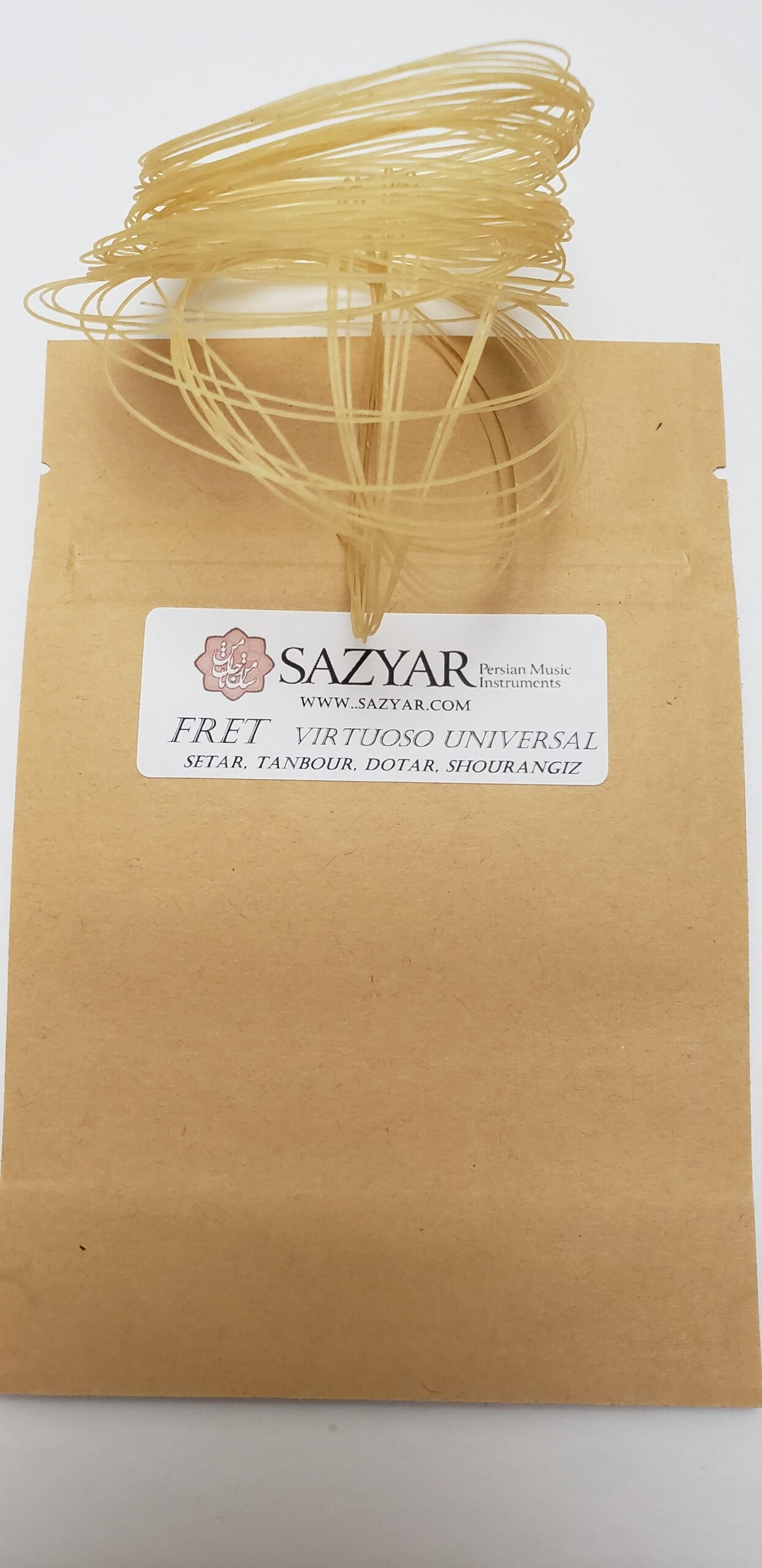
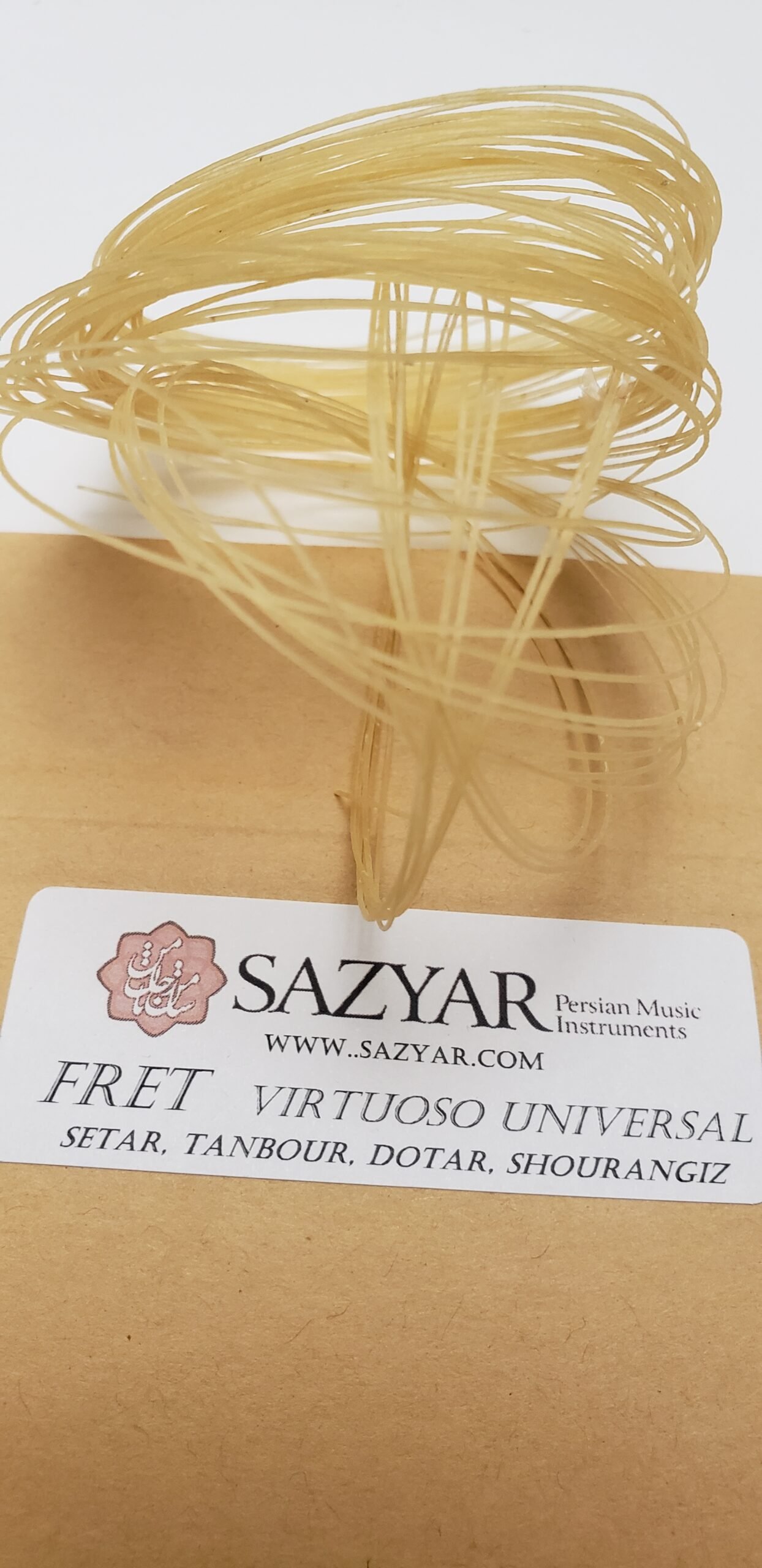
Fret (Pardeh) for Setar, Tar, Tanbour, Dotar
Fret (Pardeh) for Setar, Tar, Tanbour, Dotar
Price:
$24.64 USD – $34.79 USDPrice range: $24.64 USD through $34.79 USD
Premium organic frets (Pardeh) selected for superior tone, precision, and consistency—ideal for virtuoso-level string instruments.
Select the item:
Save 10% at checkout when you choose pickup from our Toronto store
Product Description
Frets (Pardeh) – Precision for Virtuoso Instruments
Frets (Pardeh) play a critical role in the sound quality of string instruments. They shape the tone, clarity, and responsiveness of each note, and even subtle differences in fret thickness can noticeably affect the instrument’s sound and feel.
Sazyar frets are sourced from the finest organic materials available on the market. Each fret is carefully selected and packed to meet the standards of virtuoso-level instruments, ensuring precision, consistency, and superior tonal performance.
Number of Turns
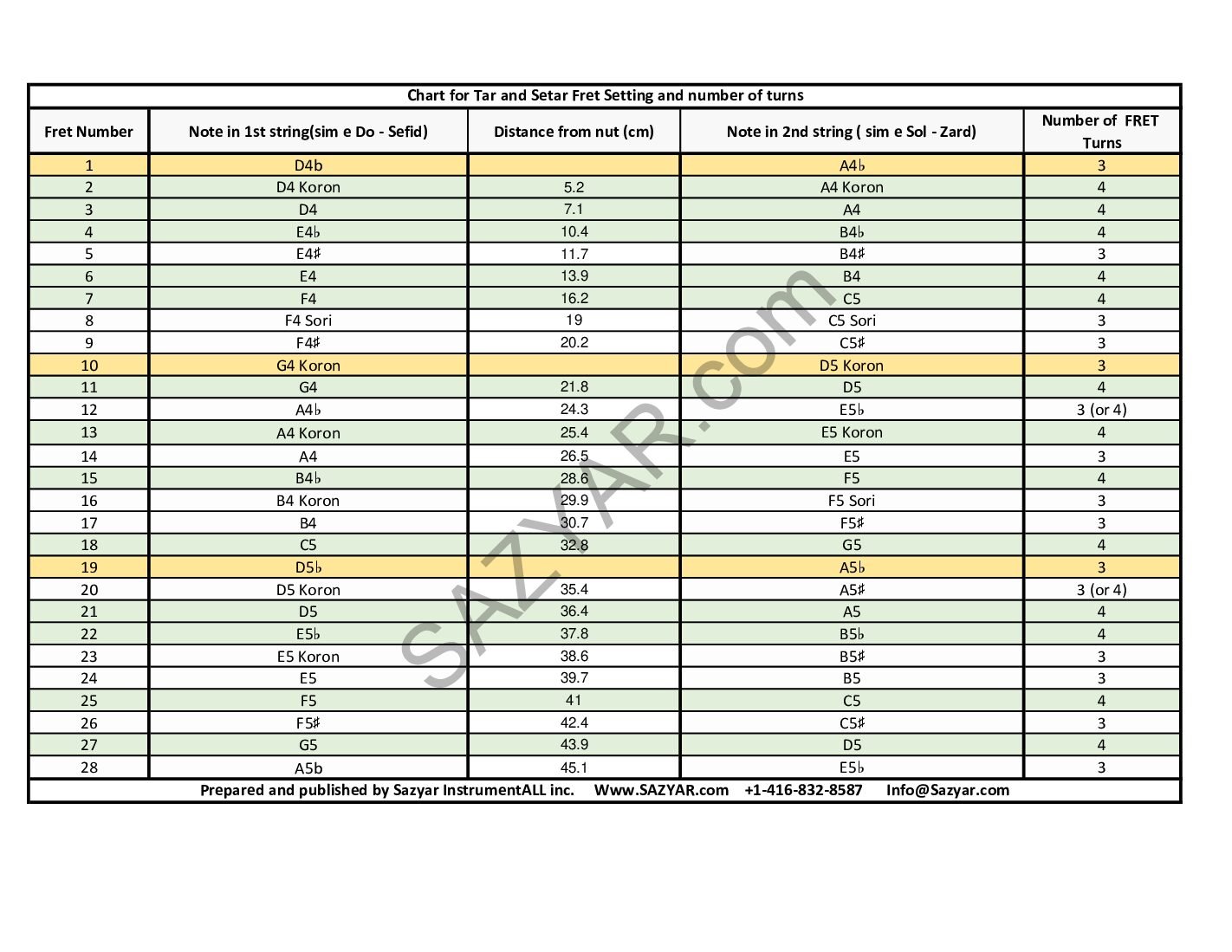
For Setar and Tar, each fret is tied with three or four turns of string.
Frets corresponding to the main notes of Dastgah Shur are tied with four turns, while others use three turns.
This differentiation helps musicians recognize the correct note by touch while playing.
For the Tar, the last six frets at the bottom of the fretboard are secured with small nails at the back for added stability.
You can see here, how many turns are needed for Setar and Tar.
Table of the number of turns, positions of Frets and Notes in Setar and Tar
Number of Frets:
The traditional Setar and Tar have 25 frets, however some new Setars and Tars have recently added 3 more frets, just to be capable of playing some other sclaes as well. The 3 additions are: the D4b, G4b and D5b. In summary, the traditional Setars and Tars have 25 frets however some new Setars and Tars have up to 28 frets.
The Tanbour has originally 14 frets. The Shourangiz has normally 22 frets and the Dotar has a range of 5,7,8,9,11, 14 frets, based on the original area(Mazandaran, West Khorasan, South Khorasan, Kormanj, etc.)
Fret Thickness
Fret thickness significantly influences the tone and projection of the instrument:
-
Thin frets produce a soft, clear sound.
-
Thick frets create a stronger, fuller, and more robust sound.
Recommended ranges for different instruments:
-
Low range (45–60): Ideal for Tanbour and Dotar, and for some Setars requiring a softer tone.
-
Mid range: Balanced sound strength for versatile playing.
-
Thick range: Suited for Tar and many types of Setars, offering stronger tonality and higher volume.
Fret Length
-
Setar (full): ~11 meters
-
Tar (full): ~18 meters
-
Tanbour or Dotar: ~6–7 meters
-
Shourangiz: ~9–11 meters (depending on fretboard thickness)
Material
Gut Frets
Traditionally made from carefully cleaned, twisted, and dried sheep gut, a natural material used for centuries in string instruments.
The gut is processed into uniform strands, polished, and sized for consistent thickness and strength.
Sheep gut is flexible, durable, and acoustically responsive, allowing subtle vibration transfer and warm tonal articulation. Its natural elasticity makes it adjustable and gentle on strings, particularly important for historical and traditional fretted instruments.
Alternative Materials
Nylon frets: Highly durable and stable, but produce a harder, more metallic sound, lacking the warmth and authenticity of gut. Ideal for practical use, but less historically or tonally accurate.
Surgical gut (catgut): Also derived from natural gut, but more durable, smoother, and consistent than traditional gut. Provides a good balance between authentic tone and longevity, making it preferred for players seeking natural sound with improved durability.
Shelf Life and Storage
Shelf life: Approximately 10 years if properly stored.
Storage instructions: Keep frets sealed and maintain relative humidity between 45–55% RH to preserve flexibility and quality.
Table of the number of turns, positions of Frets and Notes in Setar and Tar
You may also like
No results found.