Daf is a framed drum musical instrument widely used for folk and classical music in central and south Asia. Kurdish community uses Daf in their rituals and other ceremonies.
In the Pahlavi era, Daf was called Dap and it is believed that Daf or Dap was before the existence of Islam or Sufism.
- Based on historical evidence, Daf has been played to accompany other instruments within the Nowruz (The first day of the Persian New Year – March 21st) and other ceremonies in the Sassanid.
- The classical music of the Sassanid was developed by Barbod the Great to be played in the ceremonies and one of those modes was called Khosravani – just to follow the name of mythical king Khosrow. These modes have passed from maestros to students, from hearts to hearts and they finally formed the traditional Radif and Dastgah modal system in the Iranian classical music system.
- Daf has the capability to play so complex and intricate rhythms that can put the audience at a high level of trance, leading them to a spiritual state.
- One of the well-known beats for Daf is called “Se jar”, which is mainly a 10/8 beat.
Daf components:
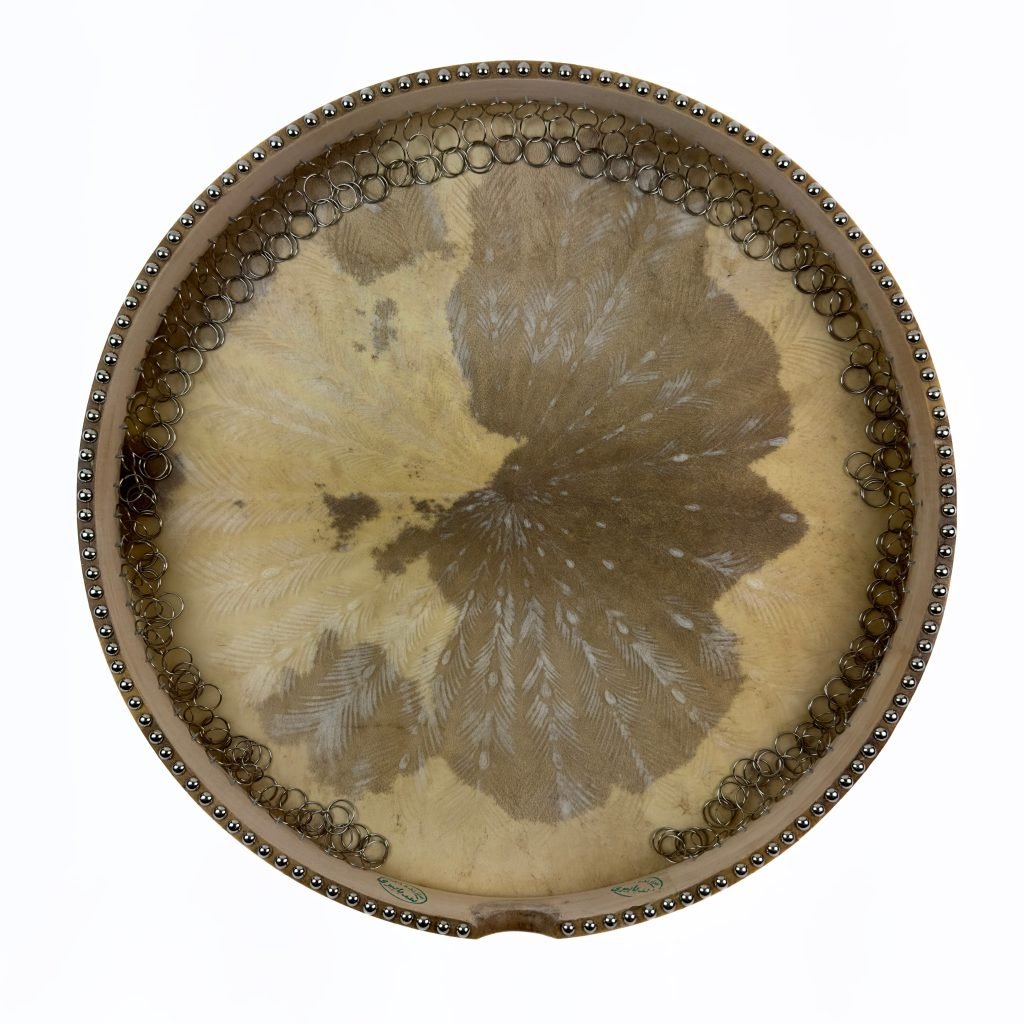
- Daf frame(rim): With a diameter of 21″ or 52 cm. The rim is wood-shaped into round with hot water treatment or bending around a hot metal cylinder. The height of Daf is between 2-3 inches or 5-7 cm.
- Drumhead: is usually fish or goat skin and in humid climates yields its required tension and needs to be heated to remove humidity. In recent years synthetic skins by main drum manufacturers (like Remo) have been a great remedy for Daf players in humid weathers such as Europe or America.
- Jingles: made of small rings to attach to the rim.